
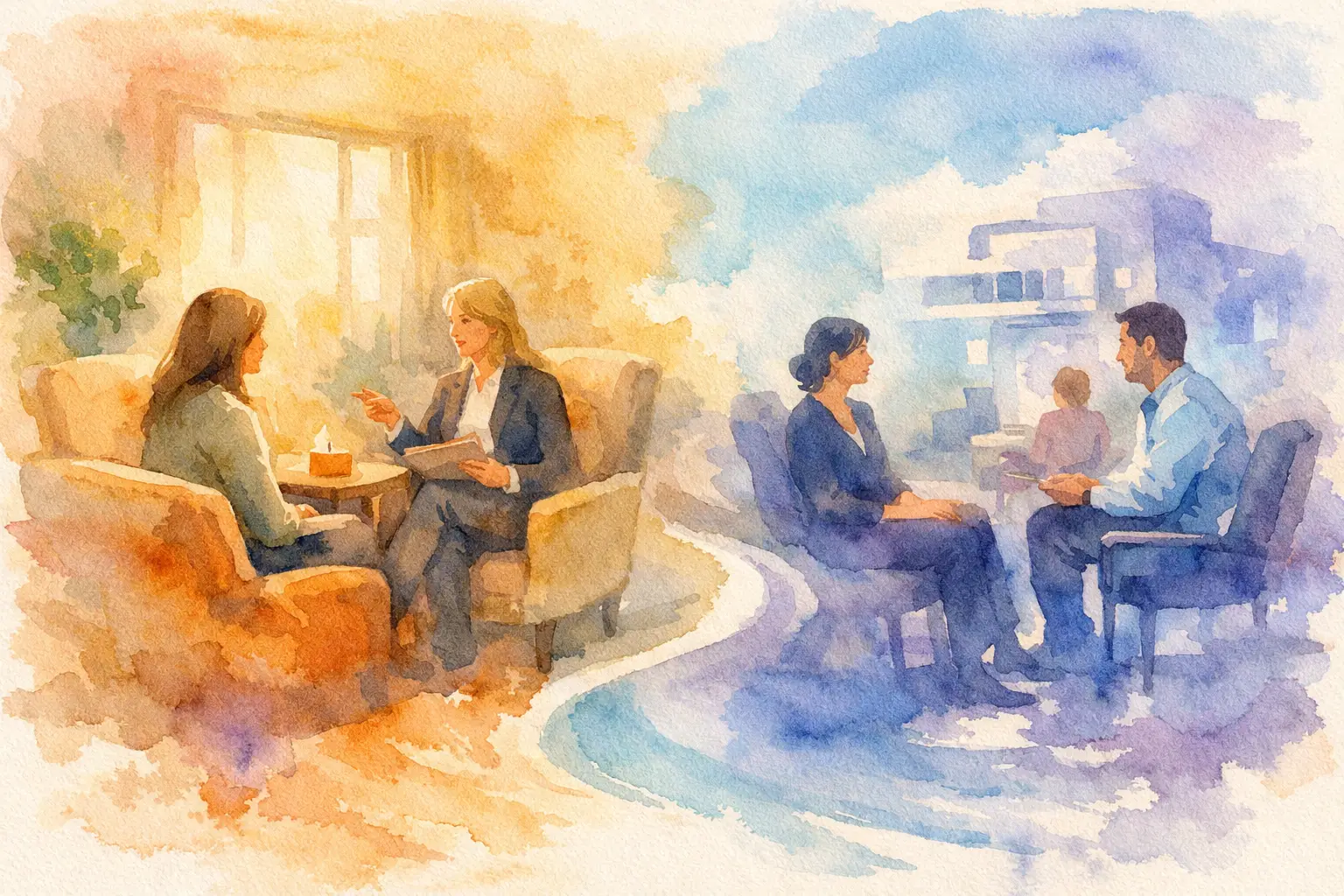
When you are already struggling, choosing between private counselling or NHS therapy can feel like one more thing to carry. You may be dealing with anxiety that is making everyday tasks harder, low mood that will not shift, trauma that keeps resurfacing, or relationship problems that are affecting home life. At that point, what matters is not which option sounds best on paper, but which one is most likely to get you the right support at the right time.
Both private therapy and NHS services help many people. Neither is automatically better in every situation. The real difference often comes down to timing, choice, complexity, budget, and the kind of therapeutic relationship you are looking for.
Private counselling or NHS therapy: what is the difference?
The NHS usually provides therapy through your GP, local talking therapies service, community mental health team, or specialist services. For many people, this is the first route they consider because it is free at the point of use. It can be an excellent option, especially if cost is your main concern or if your needs fit well within what a local NHS service offers.
Private counselling is arranged directly with an individual therapist or a practice. You choose where to go, who to work with, and often whether you want face-to-face or remote sessions. You pay for the sessions yourself, but the process is often quicker and more flexible.
That sounds simple enough, but the decision is rarely just about cost versus convenience. Therapy is personal. The best option is the one that feels safe, accessible, and realistic for your circumstances.
Waiting times can shape the whole experience
One of the biggest practical differences between private counselling or NHS therapy is how long you may wait to begin.
NHS services can involve assessment stages, thresholds for eligibility, and waiting lists that vary depending on your area and the type of support needed. Some people are seen quickly. Others wait weeks or months, particularly for specialist help. If you are functioning but distressed, you may be offered lower intensity support first, even if you feel you need more in-depth work.
Private counselling usually allows you to start much sooner. For someone struggling with panic attacks, grief, relationship breakdown, or worsening depression, that shorter gap can matter a great deal. Early support can make problems feel more manageable before they become more entrenched.
That said, if your situation involves immediate risk, severe mental illness, or urgent safeguarding concerns, the NHS remains essential. Private therapy is valuable, but it is not a substitute for emergency or crisis care.
Choice matters more than many people expect
With NHS therapy, you may have limited choice over the therapist, appointment time, session frequency, or therapeutic approach. That does not mean the care is poor. Many NHS clinicians are highly skilled and deeply committed. But services are under pressure, and they have to work within set pathways.
Private therapy gives you more control. You may be able to choose a therapist based on their experience with trauma, bereavement, addiction, abuse, low self-esteem, or couples work. You can also look for a style that suits you. Some people want a gentle, reflective space. Others want therapy that is more structured and practical.
This can be especially important if you have tried therapy before and it did not feel like the right fit. The relationship between client and therapist is one of the strongest predictors of whether therapy helps. Feeling heard, respected, and at ease is not a luxury. It is part of the work.
NHS therapy can be focused, private counselling can be more flexible
NHS talking therapies often follow evidence-based models with a clear structure. For some people, that is exactly what they need. If you are dealing with mild to moderate anxiety or depression, brief therapy can be effective and appropriate.
Private counselling can offer that same focus, but it often has more room to adapt to the person rather than the service model. Sessions may continue for longer if needed. The work can move at a pace that feels manageable. There may be more space to explore layered issues, such as childhood experiences affecting current relationships, trauma sitting beneath anxiety, or grief mixed with identity loss and burnout.
This flexibility can help if your difficulties do not fit neatly into one category. Many people do not arrive with a single issue. They come because they are exhausted, overwhelmed, and no longer coping in the way they used to. Good therapy makes room for that complexity.
Cost is real, and it deserves an honest look
The clearest advantage of NHS therapy is that it is free. For many people, that is decisive. If private fees would add financial pressure or guilt, it may not feel helpful to force that route.
Private counselling involves ongoing cost, and that needs to be weighed realistically. Sometimes people begin privately because they need support quickly, then review as they go. Others prefer to invest in regular therapy because the flexibility and continuity feel worth it. There is no virtue in choosing the more expensive route if it is going to create strain that undermines the process.
At the same time, it is understandable that some people see private therapy as a practical health expense rather than an indulgence. If you are missing work, struggling at home, withdrawing from others, or feeling constantly on edge, timely support can have a meaningful effect on daily life.
Privacy, continuity and comfort
Many clients value the privacy and consistency that private therapy can offer. You usually know who you will be seeing, where the sessions will take place, and how often they will happen. That predictability can be very reassuring, particularly if trust is difficult for you or if your life already feels unsettled.
NHS services can also provide excellent continuity, but changes in staffing, treatment pathways, or service limits sometimes affect the experience. In a stretched system, therapy may be time-limited even when more support would help.
Comfort matters too. Some people find it easier to open up in a calm private practice, or from home through remote sessions. If travelling, work, caring responsibilities, or physical health make attendance difficult, flexible access can remove a barrier that might otherwise stop therapy altogether.
For people in Folkestone, Hythe and nearby parts of Kent, being able to choose local in-person support or remote appointments can make therapy easier to sustain over time.
Which option suits which situation?
If your main concern is affordability, and you can manage a wait, NHS therapy may be the right starting point. It is also appropriate when you want to begin within a recognised local pathway or when your needs fit clearly within the support available.
If you want to start sooner, prefer greater choice, need a therapist with specific experience, or want more flexibility in how therapy is delivered, private counselling may suit you better. This is often the case for people seeking trauma therapy, couples work, longer-term support, or help that needs to fit around a busy or unpredictable life.
Some people use both at different times. You might join an NHS waiting list while arranging short-term private support. Or you may begin privately and later decide you are ready to continue in another setting. It does not have to be an all-or-nothing decision.
How to decide between private counselling or NHS therapy
A useful question is not simply, which is better, but what do I need right now?
If you need help quickly, waiting may feel too costly emotionally. If money is tight, free support may be the most sustainable path. If you already know that trust, specialism or continuity are crucial for you, private therapy may feel safer from the outset.
It can also help to think about what has been happening recently. Are you coping less well week by week? Is your sleep poor, your anxiety rising, your relationship under strain, or your past beginning to affect your present more heavily? If so, earlier support may be worth prioritising.
A good therapy service should not pressure you either way. It should help you understand your options clearly and make a decision that fits your needs, not someone else’s idea of the right route.
Self Horizons supports people who want accessible, professional therapy that feels both welcoming and effective, whether they are seeking help for anxiety, depression, trauma, bereavement, addiction or relationship difficulties.
If you are weighing up private counselling or NHS therapy, try not to judge yourself for finding the choice difficult. Reaching for support is already a significant step. The right starting point is the one that gives you the best chance of feeling heard, supported and able to move forward.