
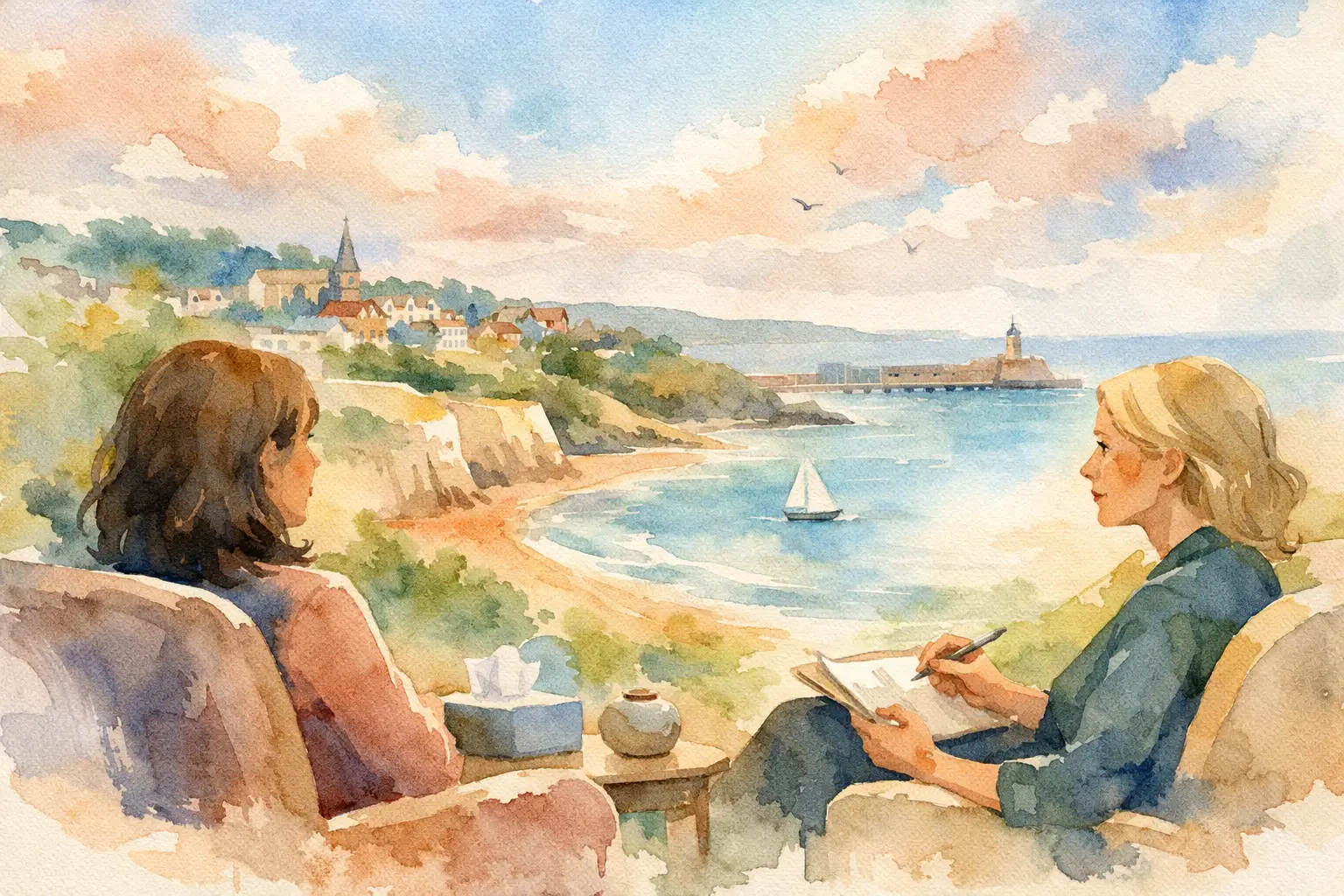
When anxiety is keeping you awake, a relationship has become strained, or an old experience is affecting everyday life, it can be difficult to know where to start. Private counselling in Folkestone offers a confidential space to speak openly, make sense of what is happening and find a way forward at a pace that feels manageable.
Asking for support is not an admission that you have failed to cope. Often, it is a practical response to carrying too much for too long. Therapy can help whether there is a clear event behind your feelings or simply a growing sense that life no longer feels like yours.
What private counselling can offer
Private counselling is professional emotional support arranged directly with a therapist or practice. Sessions are usually held regularly, often weekly, and are shaped around your needs, goals and circumstances. You may choose to meet in person, or remotely from home if that is more comfortable or practical.
For some people, the main benefit is having a place where they do not have to protect other people from their feelings. For others, it is the chance to understand repeated patterns – perhaps withdrawing when overwhelmed, expecting the worst, using alcohol to cope, or finding it hard to say no. Counselling does not offer a quick fix or tell you how to live. It provides thoughtful, structured support to help you understand yourself and make changes that are realistic for your life.
The privacy and flexibility of independent therapy can be especially helpful when work, caring responsibilities, travel or personal preference make fixed arrangements difficult. It can also allow you to seek support without waiting until things feel unbearable. The right timing varies from person to person, but you do not need to reach crisis point before you deserve care.
Private counselling in Folkestone for real life difficulties
People come to counselling for many reasons, and not every difficulty has a neat label. You may be living with persistent worry, panic attacks, low mood or a loss of confidence. You may be grieving someone you love, struggling after a separation, adapting to parenthood or facing uncertainty at work.
Therapy can also be valuable when the impact of the past has not gone away. Experiences of abuse, neglect, traumatic events or difficult relationships can affect sleep, concentration, trust, physical tension and self-worth long after the event itself. Trauma-informed support gives these experiences the care they require, without pressuring you to share more than you are ready to explore.
For couples, counselling can create a calmer setting for conversations that keep ending in blame, silence or misunderstanding. The aim is not to decide who is right. It is to understand the pattern between you, communicate more honestly and consider what each person needs for the relationship to move forward. Sometimes couples therapy helps partners reconnect; sometimes it helps them make difficult decisions with greater clarity and respect.
Choosing the kind of therapy that suits you
There is no single form of counselling that is right for everyone. A good starting point is to think about what you want help with and what would make sessions feel safe enough for you to be honest.
General counselling may be appropriate if you need space to talk through current pressures, emotions or life changes. It can be useful for anxiety, depression, bereavement, relationship concerns and low self-esteem, particularly when you want to understand the wider context of how you are feeling.
If distressing memories, flashbacks or strong physical reactions are linked to trauma, EMDR therapy may be considered. EMDR is a structured therapy that helps the brain process difficult memories differently. It is not suitable for every situation, and a properly trained therapist will assess whether it is appropriate before beginning. The assessment matters because effective trauma work needs to be paced and supported carefully.
Remote therapy can be a strong option if you have a busy routine, limited mobility, caring commitments or simply feel more at ease in familiar surroundings. Some people find online sessions make it easier to fit therapy into their week. Others prefer meeting face to face because they value stepping into a dedicated, private space. Neither option is automatically better. What matters is whether you can attend consistently and feel able to engage.
What to look for before booking
The relationship with your therapist is central to therapy. Qualifications and experience matter, but so does the sense that you are being listened to without judgement. You do not have to feel instantly comfortable discussing everything. Trust often develops over time. Still, you should feel respected, taken seriously and clear about how the therapist works.
Before arranging ongoing sessions, it is reasonable to ask about the therapist’s professional training, registration or accreditation, experience with your particular concern, fees, session length and cancellation arrangements. You may also want to know whether they offer in-person and remote appointments, and how confidentiality is handled.
Confidentiality is a key part of counselling, but it is not an unlimited promise of secrecy. A therapist should explain the boundaries clearly, including the rare circumstances where they may need to act because there is a serious and immediate risk of harm. Knowing this from the outset helps create a relationship built on honesty rather than uncertainty.
Practical details deserve attention too. The most insightful therapy will be hard to sustain if appointments are impossible to attend or fees create constant pressure. Consider the location, times available, cost and whether remote sessions would make regular support more achievable. Choosing a service that works with your actual life is not a minor detail. It supports the consistency that therapy often needs.
Your first session does not need to be perfect
Many people worry that they will not know what to say, will become upset, or will be expected to explain their whole life story immediately. A first session is usually an opportunity to discuss what has brought you to therapy, what you hope may change and whether the approach feels suitable.
You can begin with the most pressing issue, even if it seems messy or hard to explain. Statements such as “I do not feel like myself”, “I cannot switch off” or “I keep reacting in ways I do not understand” are enough to start a meaningful conversation. A skilled therapist will help you put words to your experience without rushing you.
It is also all right to ask questions. You might want to know how often you will meet, what sessions might involve, or how progress will be reviewed. Counselling is collaborative. You remain an active part of decisions about your care.
How change tends to happen
Therapy is rarely a straight line. There may be early relief simply from being heard, followed by periods when difficult feelings become more noticeable as you begin to look at them properly. That does not necessarily mean counselling is making things worse. It can mean you are addressing material that has been pushed aside. A therapist should help you manage this process safely, with grounding strategies and a pace that feels tolerable.
Progress may look quieter than people expect. You may notice you recover more quickly after a difficult day, recognise a trigger before it takes over, sleep a little better, or speak to yourself with less harshness. In relationships, progress may mean being able to pause before an argument escalates or express a need without fear.
It also depends on the issue. A focused piece of work around a current problem may take fewer sessions than therapy for longstanding trauma, addiction or deeply rooted relationship patterns. There is value in reviewing the work together so that therapy remains purposeful rather than becoming something you attend without knowing why.
Self Horizons provides counselling and psychotherapy support for individuals and couples, including remote therapy and specialist approaches such as EMDR. The aim is not to make your experiences sound clinical or complicated. It is to offer professional care that meets you where you are and helps you take the next workable step.
If you are in immediate danger, feel unable to keep yourself safe, or are concerned that someone else is at serious risk, contact emergency services on 999 or go to A&E. Counselling can be an important part of longer-term support, but urgent safety needs immediate help.
You do not need the perfect explanation before reaching out. A willingness to say that something is not right can be enough for a first conversation – and sometimes that conversation is where change begins.