
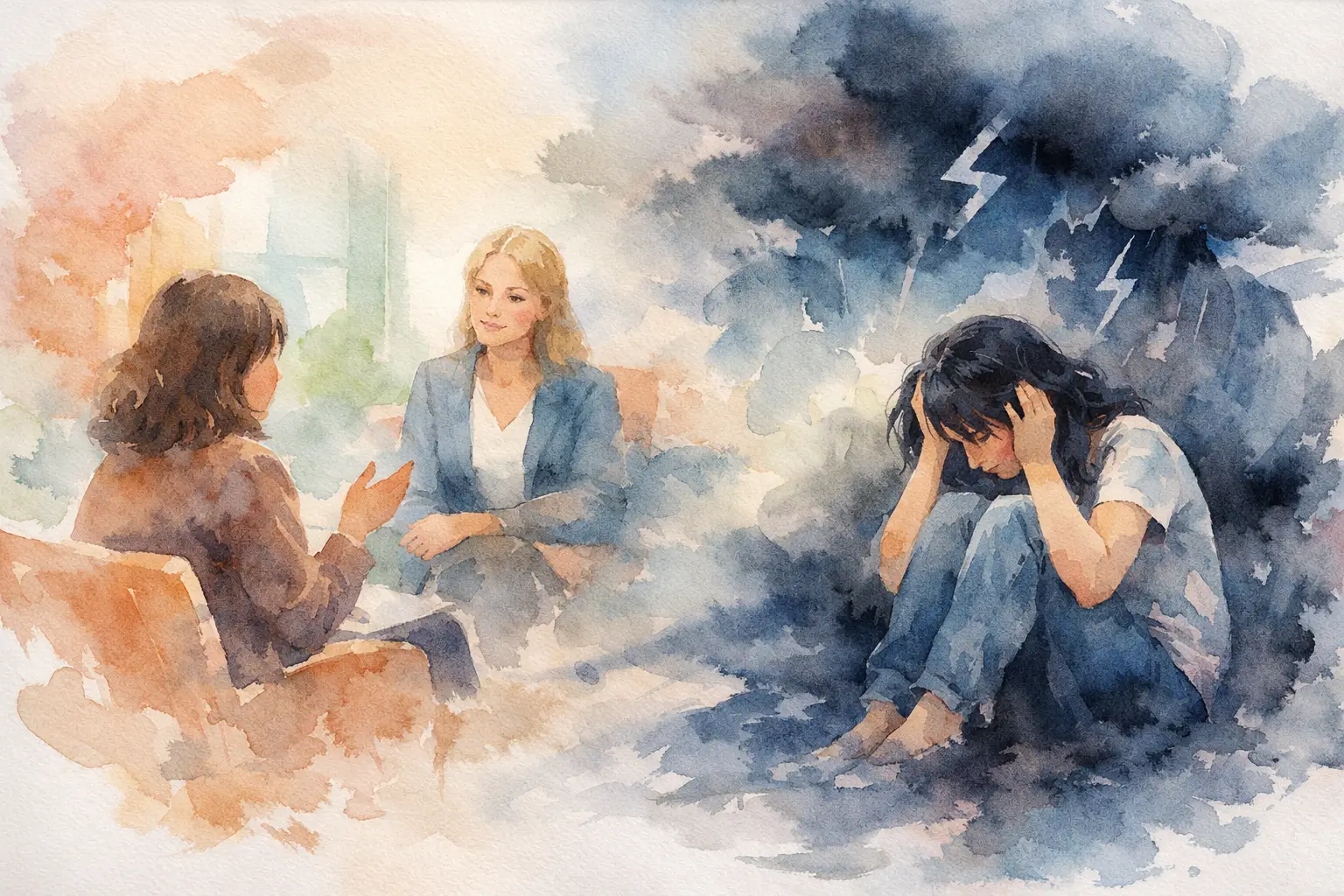
One minute you are getting on with your day. The next, your chest is tight, your heart is racing, your thoughts are telling you something is badly wrong, and it feels almost impossible to slow it down. That is why understanding how counselling helps panic attacks matters. Panic can feel sudden and overwhelming, but it is also treatable, and many people find that therapy gives them both relief and a clearer sense of control.
For some people, panic attacks seem to come from nowhere. For others, they begin in certain places or situations – driving, shopping, being alone, being in a crowd, going to sleep, or even sitting quietly after a stressful period. However they show up, panic attacks often create a second problem beyond the attack itself: the fear of having another one. That fear can start to shrink daily life.
What panic attacks can feel like
A panic attack is a surge of intense fear or distress that peaks quickly and affects both mind and body. People often describe shortness of breath, dizziness, shaking, sweating, nausea, numbness, pounding heartbeat, or a sense of unreality. It can feel frightening enough to make someone think they are collapsing, losing control, or having a medical emergency.
Those sensations are real. They are not imagined, exaggerated, or a sign of weakness. Panic is the body going into high alert, often much faster than the rational part of the mind can catch up. When that happens repeatedly, it makes sense that confidence drops and avoidance begins.
Counselling does not dismiss the severity of that experience. Good therapy starts by taking it seriously.
How counselling helps panic attacks in practice
Counselling helps panic attacks by doing more than offering reassurance in the moment. It helps you understand what is happening, why it may be happening, and what keeps the cycle going.
One of the first benefits is making sense of the pattern. Panic often becomes a loop. A physical sensation appears – perhaps a flutter in the chest or a lightheaded feeling. The mind interprets it as danger. Anxiety rises, the body reacts more strongly, and the fear escalates. In counselling, that cycle is explored carefully so it becomes less mysterious and less powerful.
Once the pattern is clearer, therapy can help reduce the fear attached to the sensations themselves. Many people with panic are not only afraid of situations. They are afraid of what their own body might do next. A counsellor can help you respond differently to those early signs, which often lowers the intensity and frequency over time.
Therapy also looks at the wider picture. Panic attacks do not always happen because of one obvious cause. Sometimes they are linked to ongoing stress, grief, trauma, health anxiety, burnout, relationship strain, or a long period of coping alone. Sometimes there is no single cause, but there are still factors that make the nervous system more sensitive. Understanding that context can be deeply relieving.
Why panic often grows through avoidance
Avoidance is understandable. If a place, journey, or situation feels linked to panic, of course you may want to stay away from it. The difficulty is that avoidance usually teaches the brain that the situation really is dangerous. Over time, life can become smaller.
This is one area where counselling can be especially helpful. Therapy offers a safe, steady place to notice what you have started avoiding and why. That might include obvious things such as shops, public transport or work meetings, but it can also include less visible patterns – avoiding exercise because it raises your heart rate, avoiding being alone, avoiding sleep, or constantly checking for signs that panic is coming.
A counsellor will not force you into situations before you are ready. The work is usually gradual and collaborative. The aim is not to push through fear harshly. It is to rebuild confidence in a way that feels manageable and realistic.
The kinds of therapy that may help
There is no single approach that suits everyone, which is why it helps to have support tailored to you. Some people benefit from structured anxiety-focused therapy that looks closely at triggers, thoughts, body sensations and behaviours. This can help break the panic cycle and build practical coping strategies.
Others need space to explore the emotional roots of their panic. If attacks began after trauma, loss, abuse, a major life change or a long period of strain, counselling may need to go beyond symptom management. In those cases, the goal is not only to reduce panic attacks but to address the deeper stress that may be keeping the nervous system on edge.
For some people, trauma-informed work or EMDR may be appropriate, especially if panic is connected to distressing past experiences. For others, a calm, supportive talking therapy approach is the best place to start. It depends on what is driving the panic and what feels safe enough for you.
What you might work on in sessions
Counselling is practical as well as reflective. In sessions, you might begin by identifying what tends to happen before, during and after an attack. That can include thoughts, body sensations, places, time of day, recent stress, sleep, caffeine, alcohol, conflict, hormonal changes, or memories that get stirred up without warning.
You may then work on grounding and calming techniques, but in a thoughtful way. Helpful strategies are not about pretending panic is fine or trying to suppress every feeling immediately. They are about helping your mind and body come out of alarm mode more steadily.
Sessions may also focus on the meaning you have attached to panic. If every attack leaves you thinking, “I am not safe” or “I cannot cope”, the panic often becomes more entrenched. Counselling can help you challenge those beliefs through experience, reflection and gradual change.
Another part of therapy is rebuilding trust in yourself. Panic attacks often leave people doubting their own body, judgement and independence. As therapy progresses, many people begin to feel less trapped by “what if” thinking and more able to return to ordinary activities.
How counselling helps panic attacks when trauma is involved
Sometimes panic is not only about anxiety. It can be the nervous system responding to unresolved trauma. A smell, a feeling, a place, a tone of voice, or even a quiet moment can trigger a surge of alarm before you consciously understand why.
In this situation, therapy needs care and pacing. Moving too quickly into distressing material can be unhelpful. A skilled counsellor will usually help you build stability first, so that the work feels containing rather than overwhelming. When trauma is recognised and treated appropriately, panic may begin to make more sense and become less frequent.
This is one reason professional support matters. Panic attacks can look similar on the surface, but the right therapeutic approach depends on what sits underneath.
Is counselling enough on its own?
Sometimes yes, sometimes no. It depends on the severity of the panic, how long it has been happening, whether there are other mental health concerns involved, and whether there are any physical health issues that also need medical attention.
For many people, counselling is a very effective treatment. For others, it works best alongside GP support, medication, lifestyle changes, or further assessment. If panic attacks are new, very intense, or accompanied by symptoms you are unsure about, it is sensible to speak with a medical professional as well.
Therapy is not an instant fix. Progress can be uneven. Some weeks feel easier than others, and setbacks do not mean failure. What matters is that the work helps you understand the pattern, reduce fear, and respond in a different way over time.
What to expect from your first appointment
If you have been living with panic, the idea of starting counselling may itself feel daunting. Many people worry they will not be able to explain what happens, or that they will be judged for how frightened they have felt. A good first session should not feel like a test.
Usually, the first appointment is about understanding your experience, how panic affects your life, and what kind of support may suit you best. You do not need to have the perfect words. You only need a space where you can begin honestly.
If face-to-face therapy feels difficult, remote sessions can also be a helpful option. For some people in Folkestone, Hythe and the wider Kent area, being able to access professional support from home makes it easier to start before avoidance becomes more entrenched.
There is no shame in seeking help for panic attacks. The fear is real, but so is recovery. With the right counselling, panic can become less dominant, less frightening and less central to the way you live your life. Often the first step is simply allowing someone to help you make sense of what your mind and body have been trying to manage alone.