Some people wait weeks or months before asking for help because the practical barriers feel almost as difficult as the anxiety itself. Getting to an appointment, arranging childcare, leaving work early, or simply facing a waiting room can all feel like too much. That is one reason online therapy for anxiety and stress has become such a valuable option. It allows people to begin support in a setting that often feels safer, calmer and more manageable.
Anxiety and stress can affect every part of life. For some, it shows up as constant worry, racing thoughts, poor sleep and a sense of dread that never quite switches off. For others, it is irritability, panic attacks, physical tension, difficulty concentrating, or feeling emotionally exhausted by pressures that used to feel manageable. When this starts to shape your routine, relationships or confidence, therapy can offer more than a place to talk. It can provide structure, understanding and practical ways to cope.
Why online therapy for anxiety and stress works for many people
Remote therapy is not a second-best version of support. For many clients, it is the reason therapy becomes possible in the first place. If anxiety makes travel difficult, if stress leaves your schedule overloaded, or if privacy matters, online sessions can remove enough pressure to make starting feel realistic.
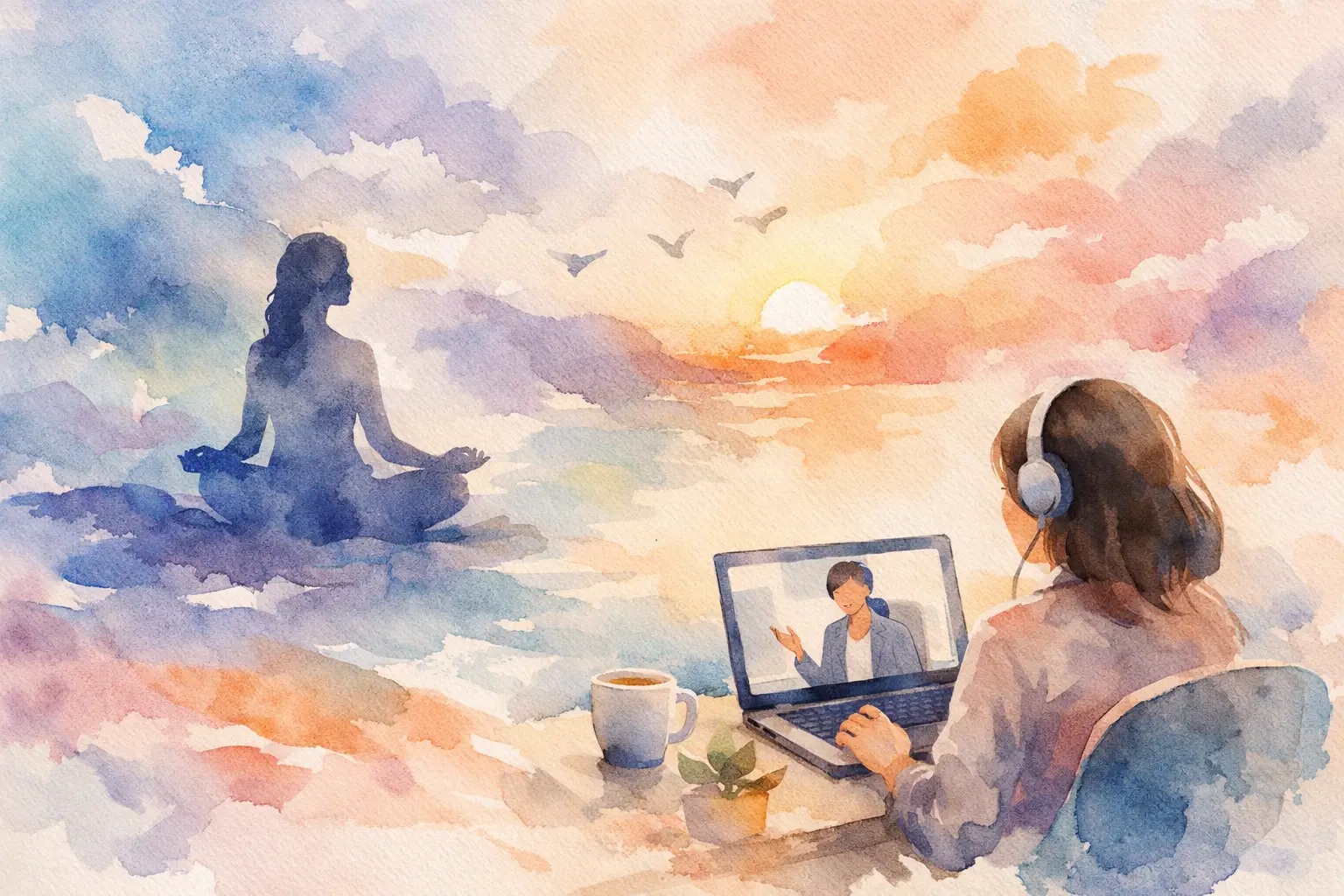
There is also something important about being in your own space. Sitting at home with a cup of tea, a blanket, or your own familiar surroundings can help lower the sense of threat that anxiety often creates. This does not mean therapy feels easy. Some sessions can still be challenging, emotional or tiring. But the setting can make it easier to stay present and engaged.
Online work can be particularly helpful for people whose stress is linked to busy working lives, caring responsibilities or ongoing health concerns. It often suits those who feel drained by commuting or who struggle to find extra time in the day. For people in Folkestone, Hythe, Canterbury, Ashford, Sandgate or Deal, remote therapy can also widen access without the need to travel across Kent for support.
What online therapy can help with
Anxiety is rarely just one thing. You may feel generally on edge all the time, or you may have specific fears that disrupt everyday life. Stress can be tied to work, relationships, money, parenting, grief, illness or major change. Sometimes the cause is obvious. Sometimes people only know that they no longer feel like themselves.
Online therapy for anxiety and stress can help when you are living with persistent worry, social anxiety, health anxiety, panic attacks, burnout, overwhelm, low confidence, poor boundaries or the emotional impact of trauma. It can also support people who are dealing with stress inside relationships, where tension, conflict or disconnection has built up over time.
What matters is not whether your problem sounds serious enough. What matters is whether it is affecting your quality of life. Many people minimise their own distress because they are still functioning on the surface. They are working, parenting, replying to messages and getting through the week. But underneath, they may be struggling far more than anyone realises.
What happens in online therapy sessions
A good online session should feel clear, contained and human. It is not a cold video call or a rushed check-in. It is dedicated time with a trained therapist who listens carefully, helps you make sense of what is happening, and works with you towards meaningful change.
In early sessions, the focus is often on understanding your experience properly. That may include when your anxiety becomes worse, how stress affects your body, what coping strategies you already use, and what patterns may be keeping the problem going. Therapy is not about being told to calm down or think positively. It is about exploring what is driving your distress and finding approaches that fit your life.
Depending on your needs, sessions may include practical grounding techniques, work around unhelpful thought patterns, support with emotional regulation, or space to process difficult experiences that sit underneath present-day anxiety. If trauma is part of the picture, it is especially important that the work is paced safely and thoughtfully.
The benefits of having therapy from home
Convenience is often the first benefit people notice, but it is not the only one. Online therapy can make support feel more private. For someone who feels self-conscious about being seen entering a practice, or who finds unfamiliar places unsettling, that can matter a great deal.
It can also help with consistency. When appointments are easier to attend, people are often more able to commit to the regularity that therapy needs. That steady rhythm can be particularly useful when anxiety has made life feel unpredictable or when stress has left you feeling scattered.
There are, however, trade-offs. Online therapy depends on having a reliable internet connection, a quiet enough space, and a degree of comfort with technology. Some people miss the experience of being physically present in a therapy room. Others find home is not always the calm refuge they hoped it would be, especially if family life is busy or privacy is limited. This is why a thoughtful therapist will not assume one format suits everyone.
Is online therapy as effective as face-to-face support?
For many people, yes. Online therapy can be highly effective for anxiety and stress when the relationship with the therapist is strong and the sessions are well structured. The quality of the therapeutic work matters more than whether you are sitting in the same room.
That said, effectiveness depends on the individual. Some clients feel more open online because they are in familiar surroundings. Others connect better in person and find it easier to read nuance, body language and emotional cues face to face. In some situations, a blended approach may work well, where remote sessions offer flexibility while occasional in-person contact adds another layer of support.
The most useful question is not whether online therapy is universally better. It is whether it is right for you, right now. If the alternative is delaying support because everything feels too hard to arrange, online therapy may be the most helpful place to begin.
How to make online therapy for anxiety and stress feel safer
If you feel nervous about starting, that is understandable. Anxiety often tells people they need to get everything right before they begin. In reality, a few simple adjustments can make sessions feel more comfortable.
Choose a private space where you are unlikely to be interrupted. Use headphones if that helps you feel more secure. Keep a glass of water nearby, and give yourself ten minutes before and after the session so you are not rushing straight from a difficult conversation into work or family demands. It can also help to let your therapist know if video sessions feel exposing at first. Naming that discomfort is part of the work, not a problem.
If being on screen feels intense, your therapist can often help you settle into the process gradually. The aim is not to force you into a polished performance. It is to create a space where you can be honest, even if you feel anxious, tearful, uncertain or tired.
Choosing the right therapist online
When you are looking for support, the most important factors are professional training, experience, and whether the therapist works in a way that feels safe and approachable. Anxiety often improves when clients feel genuinely understood rather than managed.
It is worth considering whether you want short-term, focused work or longer-term therapy. You may also want to ask about experience with panic, trauma, work-related stress, relationship difficulties or other concerns linked to your anxiety. A good therapist should be able to explain their approach clearly, without jargon or pressure.
At Self Horizons, the emphasis is on accessible, professional support that meets people where they are. For many clients, that includes remote therapy that fits around real life rather than asking real life to pause.
Reaching out for help is not a sign that you have failed to cope. More often, it is the moment you stop carrying everything alone. If anxiety and stress are making daily life feel smaller, heavier or harder than it should, support from the right therapist can help you find steadier ground again.