
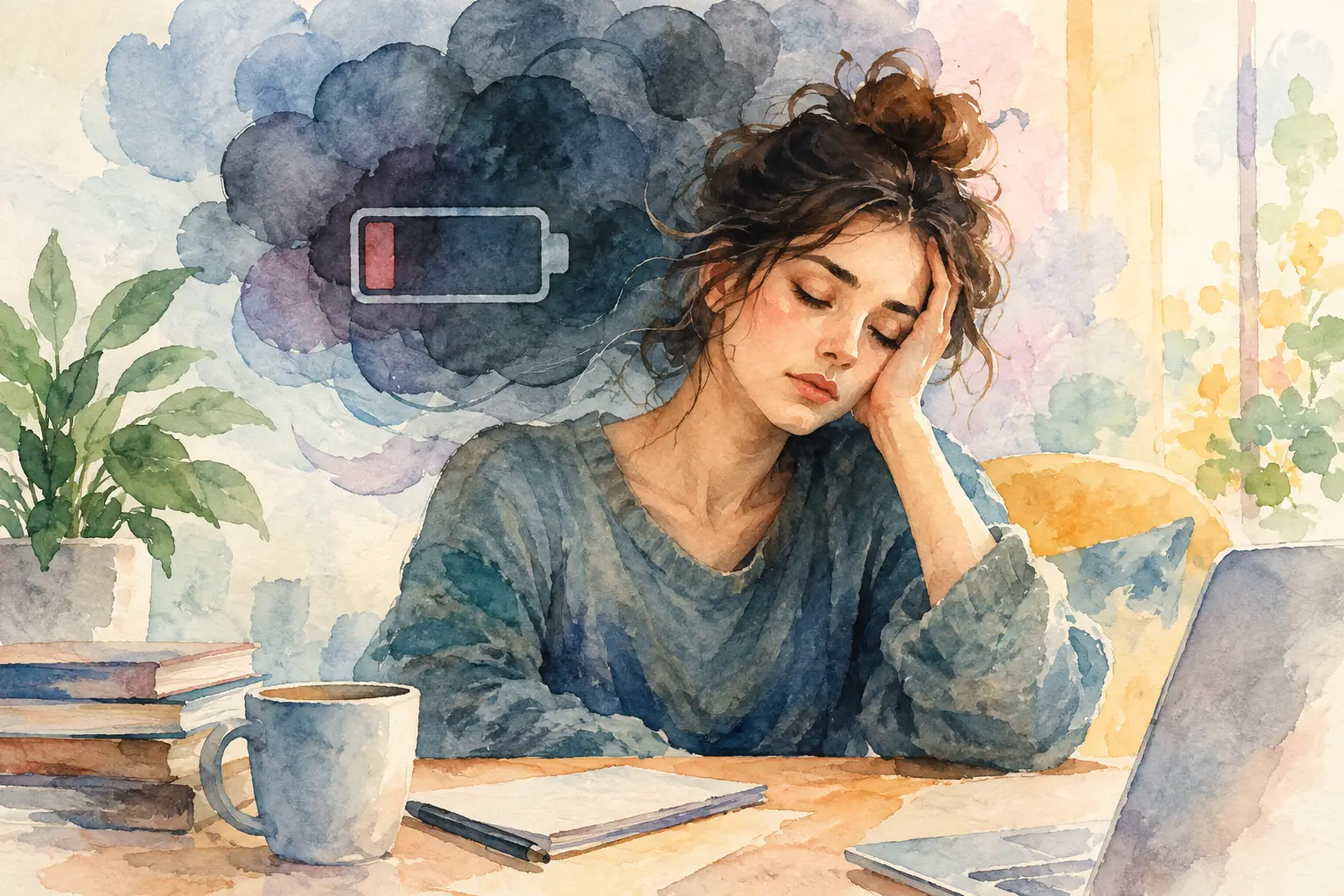
You may still be getting through work, caring for others and answering messages, yet feel as though there is very little of you left. The signs of emotional burnout are not always dramatic. Often, they build quietly over weeks or months, until the things that once felt manageable begin to feel heavy, distant or impossible.
Emotional burnout can affect anyone. It may follow prolonged pressure at work, caring responsibilities, relationship strain, grief, financial worries, trauma, illness or simply too long spent putting everyone else first. It is not a sign of weakness or failure. It is often a signal that your emotional resources have been stretched beyond what is sustainable.
What emotional burnout can feel like
Burnout is commonly associated with work, but emotional burnout is broader. It describes the depletion that can happen when you have been coping, giving, worrying or staying alert for too long without enough opportunity to rest, process and receive support.
It can overlap with anxiety, depression and the effects of trauma, but it is not always the same thing. Some people feel constantly agitated; others feel numb. You may be able to identify one clear cause, or you may simply know that you no longer feel like yourself. Both experiences deserve attention.
12 signs of emotional burnout
1. You feel emotionally flat or detached
You may notice that good news barely registers, while difficult moments feel muted rather than upsetting. This can be confusing, especially if you are used to feeling deeply or being emotionally available to others. Detachment is sometimes the mind’s way of reducing overload, but it can leave you feeling disconnected from people and from your own life.
2. Small tasks feel disproportionately difficult
Making dinner, replying to an email, booking an appointment or deciding what to wear can start to feel like too much. This is not laziness. When you are depleted, even ordinary decisions require energy that may no longer be readily available.
3. Rest does not seem restorative
A lie-in, a quiet evening or a weekend away may give brief relief, but you wake up feeling just as drained. Sleep can be affected too, with difficulty getting to sleep, waking often or sleeping for long periods without feeling refreshed. Persistent exhaustion is worth taking seriously, particularly if it is affecting your daily functioning.
4. You are more irritable than usual
You may find yourself snapping at people you care about, becoming impatient in queues or feeling angry at minor interruptions. Irritability is often a less recognised expression of emotional strain. It can be especially hard for people who pride themselves on being calm, capable or considerate.
5. You withdraw from people and activities
Cancelling plans, avoiding calls and retreating into silence can feel easier than explaining how you are. Time alone can be restorative, so withdrawal is not automatically a problem. The concern is when isolation becomes your only way to cope, or when you stop engaging with things that would normally bring comfort, interest or connection.
6. Your concentration has changed
You might read the same paragraph several times, lose your train of thought, forget appointments or struggle to follow conversations. A busy mind can make it difficult to focus, while emotional exhaustion can make thinking feel slow and foggy. These changes can be unsettling, particularly in a job or caring role where others rely on you.
7. You feel overwhelmed by other people’s needs
People who are naturally supportive can reach a point where another request feels unbearable. You may begin to resent calls for help, feel guilty for needing space, or find yourself unable to listen in the way you usually would. This does not mean you have stopped caring. It may mean you need care and boundaries yourself.
8. You have lost motivation or a sense of purpose
Tasks that once mattered may now feel pointless. You may continue because you have to, but without the satisfaction, pride or hope you used to feel. This loss of motivation can be a feature of burnout, though it can also be associated with depression, so it is helpful not to dismiss it if it persists.
9. Your body feels under strain
Emotional pressure can show up physically. Headaches, muscle tension, stomach problems, changes in appetite, frequent colds and a racing heart can all be linked to prolonged stress. Physical symptoms should not be assumed to be psychological, however. Speaking with a GP can help rule out medical causes and make sure you receive appropriate support.
10. You are working harder but feeling less effective
Burnout can create a frustrating cycle: you push yourself to catch up, make more mistakes because you are tired, then push even harder. Some people become perfectionistic; others procrastinate because starting feels overwhelming. Neither response means you are incapable. Both can be signs that the pressure has become too great.
11. You feel guilty when you stop
If rest brings guilt rather than relief, it may be worth asking what has taught you that your needs should come last. This is common among carers, parents, professionals and people who have spent years being the reliable one. Rest is not something you have to earn after reaching breaking point.
12. You cannot remember the last time you felt like yourself
This may be the clearest sign. Perhaps you used to be sociable, patient, creative or hopeful, but now feel distant from those qualities. Emotional burnout can narrow life down to getting through the next task. Recognising that change is not self-indulgent. It is often the beginning of making room for recovery.
Why pushing through can make burnout worse
Many people respond to emotional exhaustion by trying to become more efficient, more positive or more disciplined. Practical changes can help, but willpower alone cannot solve a nervous system that has been under sustained strain.
Pushing through may work for a short period when a deadline or crisis is unavoidable. Over time, though, it can increase exhaustion and make it harder to recognise your limits. Recovery usually involves reducing some demands where possible, not simply becoming better at tolerating too much.
The right next step depends on your circumstances. A temporary period of rest may help if a specific stressful event has passed. If the pressure is ongoing, you may need firmer boundaries, practical support from family or colleagues, adjustments at work, or a space to talk honestly about what is happening.
Support that helps you recover
Start with a realistic question: what would make this week 10 per cent more manageable? It might be asking someone to take on one task, eating regularly, stepping away from your phone in the evening, or saying no to an obligation you do not have capacity for. Small changes are not a complete answer, but they can interrupt the pattern of constant depletion.
It can also help to speak to someone who will not expect you to be fine. Counselling offers a confidential space to understand what has led to burnout, notice the patterns that keep it going and develop ways of caring for yourself without abandoning your responsibilities. For some people, this includes exploring anxiety, grief, difficult relationships, trauma or longstanding pressure to meet others’ needs.
At Self Horizons, counselling can be accessed in person or remotely, offering flexibility for people whose work, caring commitments or energy levels make travel difficult. Therapy is not about being told to simply slow down. It is about finding support that fits the reality of your life and helps you move forward with greater clarity and self-compassion.
If you are experiencing persistent low mood, panic, thoughts of harming yourself or feeling unable to stay safe, seek urgent support through your GP, NHS 111, local crisis services or emergency services. You do not have to manage a crisis alone.
You do not need to wait until everything falls apart before taking emotional exhaustion seriously. Noticing that you are struggling is a meaningful act of care, and asking for support can be the first step towards feeling present in your own life again.