
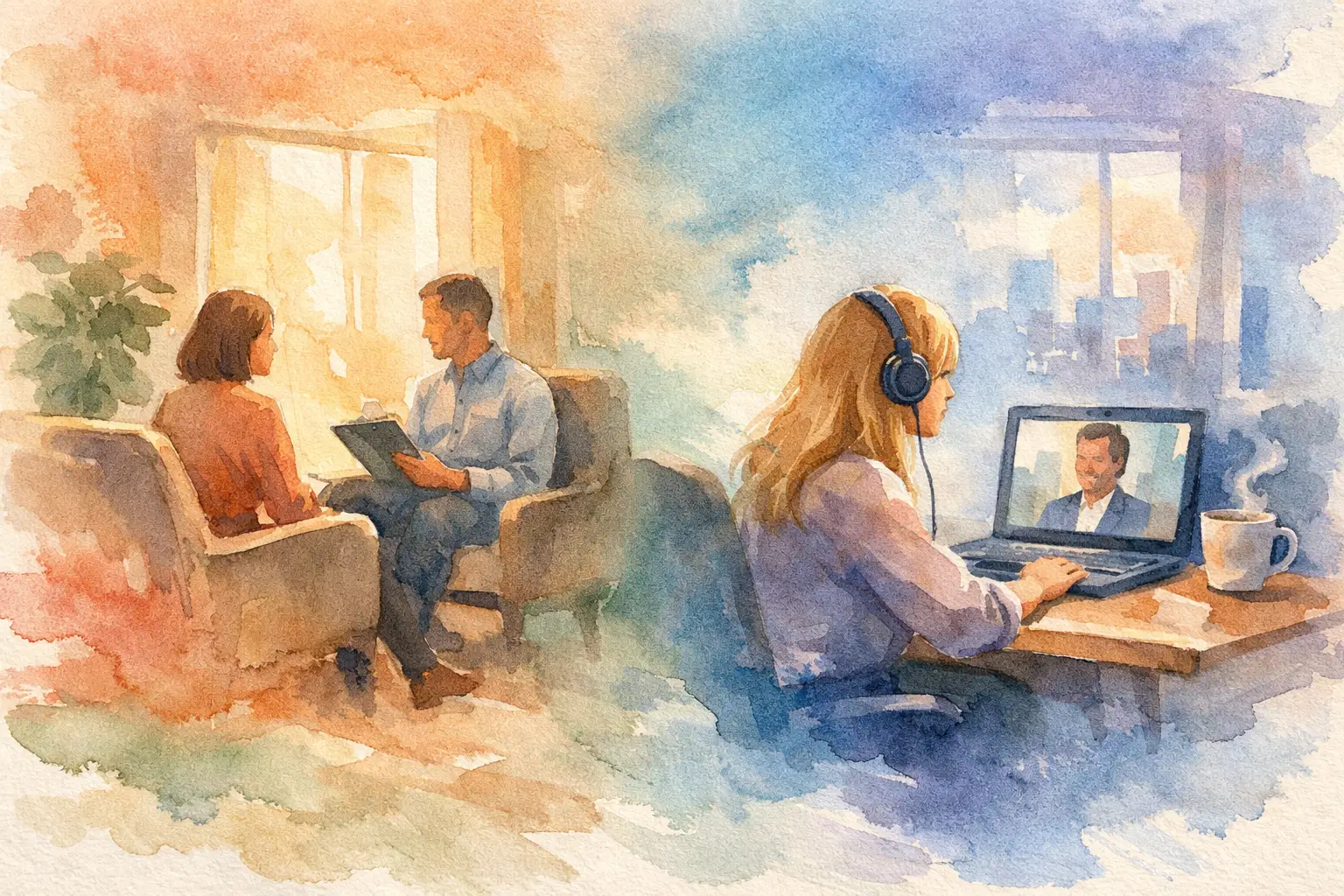
The question of in person or remote counselling often comes up at the point when someone has finally decided they would like support. It can feel like a small practical decision, but the setting of therapy can affect how safe, comfortable and able to speak openly you feel. There is no universally better option. The most helpful format is usually the one that makes it realistic for you to attend regularly and engage honestly with the work.
For some people, sitting in a calm, private room with a therapist provides a welcome separation from everyday pressures. For others, being able to speak from home removes the stress of travelling, arranging childcare or taking extra time away from work. Both can offer focused, professional support for concerns including anxiety, low mood, trauma, bereavement, relationship difficulties and low self-esteem.
In person or remote counselling: the meaningful differences
Counselling is not simply a conversation. It is a confidential therapeutic relationship, with time and space to understand what is happening, explore patterns and develop ways forward. That relationship can be built in person or online, but each setting has practical and emotional differences worth considering.
In-person sessions give you a neutral place that is set aside for therapy. Leaving home, arriving at the practice and then returning to your day can create a useful boundary. If home is busy, emotionally difficult or shared with other people, this distance may help you focus on yourself without interruption.
Some clients also find it easier to feel present in the room. They may value the full range of non-verbal communication, such as posture, pauses and facial expression, and appreciate the reassurance of being physically alongside a therapist. This can be particularly helpful when talking about experiences that feel painful, confusing or difficult to put into words.
Remote counselling is usually provided by secure video call, although telephone sessions may also suit some people. It can offer the same dedicated therapeutic time without the journey. For people in Folkestone, Hythe and surrounding Kent communities, remote sessions can be especially useful when work, caring responsibilities, illness, mobility, weather or transport make a regular appointment harder to manage.
The privacy and convenience of being at home can make opening up feel easier. A familiar chair, a cup of tea nearby and no travel afterwards may reduce the emotional effort involved in attending. Remote work may also allow you to continue with a therapist if your circumstances change, such as moving house or temporarily working away.
When in-person counselling may be the better fit
In-person counselling can be a strong choice if you need therapy to feel clearly separate from the rest of your life. This is not about making your problems more formal or serious. It is about giving yourself a protected environment where you are not also looking at washing up, work emails or family demands.
It may be particularly suitable if you do not have a private room at home. Worrying that a partner, housemate or family member might overhear you can understandably limit what you feel able to say. Using headphones helps in some situations, but it cannot always remove the concern that someone is nearby.
Face-to-face therapy may also appeal if you feel unsettled by video calls or spend much of your working life on a screen. Some people experience screen fatigue, find eye contact through a camera unnatural, or become distracted by their own image. In a therapy room, there is less to manage technically and more opportunity to settle into the conversation.
For clients working through trauma, abuse, panic attacks or intense grief, being in a consistent, supportive physical space can feel grounding. This does not mean remote therapy is unsuitable for these concerns. It means the sense of containment provided by the room may matter more to some people, particularly at the beginning of therapy.
When remote counselling may be the better fit
Remote counselling is often the practical choice for people whose lives leave little spare time. If you can step away from work for an hour, have a session privately, and return without a round trip, regular therapy can become far more achievable. Consistency matters. A format that fits your week is often more valuable than an ideal arrangement that is difficult to sustain.
It can also support people who find travelling or unfamiliar places anxiety-provoking. The first session can feel less daunting when you are joining from a place you know. This may be helpful if depression has made leaving the house feel demanding, if you are managing a health condition, or if you are simply not ready for an in-person appointment.
Remote sessions can be a good option for couples, too, particularly where work patterns or family commitments make coordinating travel difficult. Both people still need to be in a private setting where they can speak freely. A session works best when each person has enough space to participate without feeling watched, interrupted or rushed.
Technology does need to be reliable enough for a conversation without repeated disruption. You do not need specialist equipment, but a stable internet connection, a charged device and a quiet, confidential room make a real difference. If video feels too exposing, it is worth discussing whether telephone counselling could be an appropriate alternative.
Questions to ask before you choose
Rather than asking which form of therapy is more effective in general, ask what will help you show up as yourself. Think about the practical reality as well as your instincts.
Can you create privacy at home without worrying about being overheard? Would a journey to an appointment feel manageable or add pressure? Do you need the structure of leaving your usual environment, or would travelling make you more likely to cancel? Are you comfortable using video, and is your internet connection dependable?
It is also helpful to consider what happens immediately after the session. Some people like having a walk, drive or bus journey to reflect before going back to family life. Others prefer the relief of being home already, where they can rest, make a drink or take a few quiet minutes. Neither response is wrong. It simply tells you something about what you may need from the format.
Your preference may also change over time. You might begin remotely while you build confidence, then choose face-to-face sessions later. Or you may start in person and move online during a busy period. Where appropriate, flexibility can help therapy remain accessible when life changes rather than becoming another source of pressure.
What matters more than the format
The quality of the therapeutic relationship is central. You need to feel listened to, respected and able to speak without judgement. You should also feel that your therapist has explained confidentiality, the limits of confidentiality, fees, session arrangements and the approach they use in a way you can understand.
A good counsellor will not expect you to know exactly what you need before the first conversation. You may arrive with a clear concern, such as panic attacks after a bereavement, or with a general sense that things have become too difficult to manage alone. Both are valid starting points.
At Self Horizons, the aim is to make professional therapy feel accessible and welcoming, whether you are seeking individual counselling, couples support, EMDR therapy or wellbeing support. The format can be discussed alongside the issue bringing you to therapy, your day-to-day circumstances and what would help you feel safe enough to begin.
Give yourself permission to choose what is workable
You do not have to prove that you can manage a journey to deserve face-to-face support, and you do not have to be in crisis to choose the convenience of remote therapy. Choosing counselling is already a meaningful step towards giving your wellbeing attention.
If you are unsure, begin with the option that feels most manageable now. The right therapeutic setting is not the one that looks best from the outside. It is the one that gives you enough privacy, steadiness and support to keep returning to the work that can help life feel more manageable.