
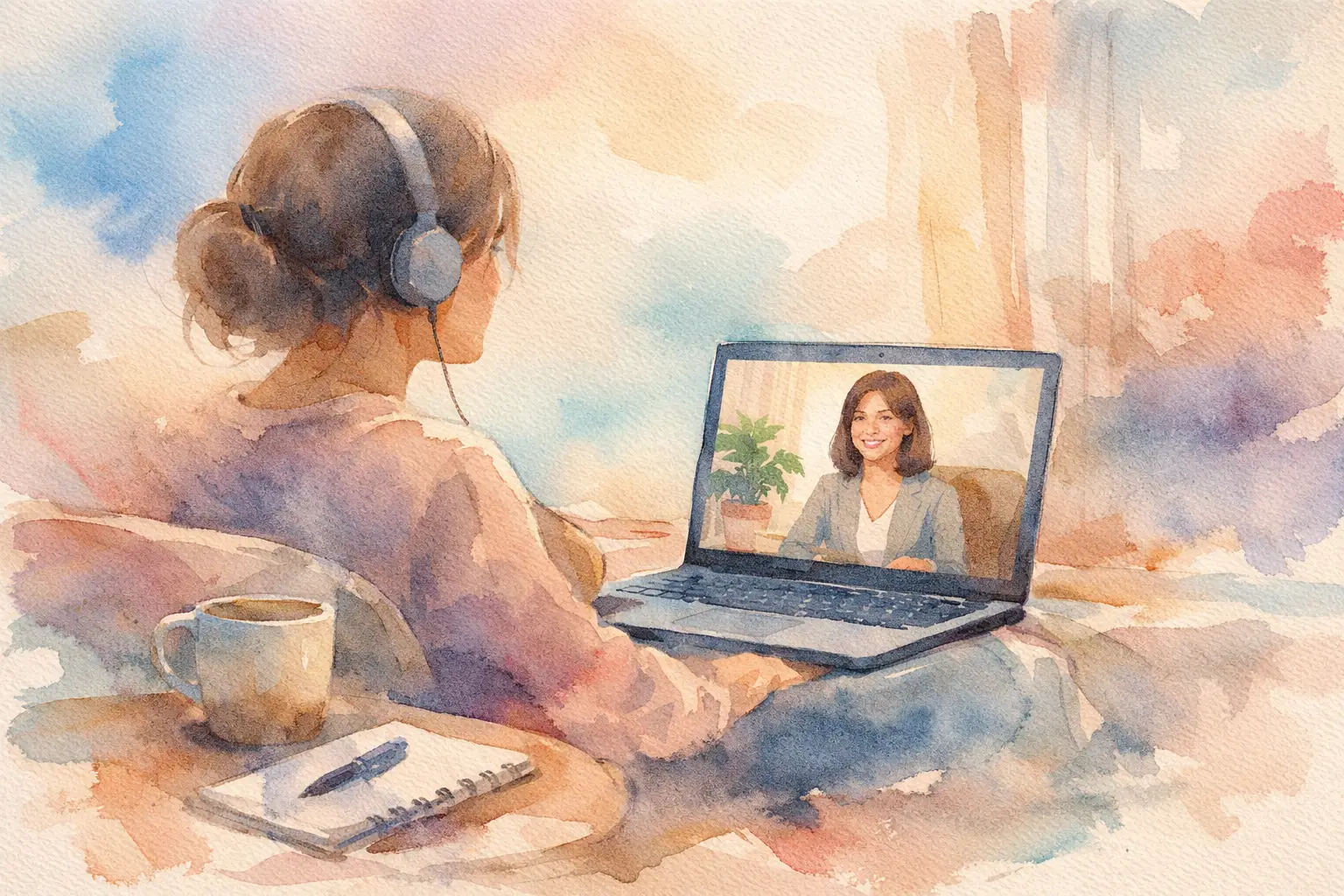
A difficult week does not always leave room for travelling to an appointment. Work, caring responsibilities, illness, anxiety about leaving home, or simply a packed schedule can all make getting support feel harder than it needs to be. Understanding how remote therapy sessions work can help you decide whether speaking with a therapist from your own space feels right for you.
Remote therapy is not a lesser version of counselling. It is a professional therapeutic conversation held through secure video, telephone, or sometimes another agreed method, rather than in the same room. For many people, it offers the privacy, consistency and flexibility needed to begin meaningful work.
How remote therapy sessions work from first contact
The process usually begins with an enquiry or initial conversation. This is a chance to explain, in as much or as little detail as feels manageable, what has brought you to therapy. You may be struggling with anxiety, low mood, grief, trauma, a relationship difficulty, panic attacks, addiction, or a change in your life that has left you feeling overwhelmed.
Before regular sessions begin, your therapist will talk through practical arrangements. This normally includes the session length, fees, cancellation policy, preferred way to communicate, and the online or telephone format you will use. They should also explain confidentiality, its limits, and what will happen if there is a concern about your immediate safety.
You do not need to arrive with a perfect account of what is wrong or a clear therapeutic goal. Many people begin by saying they are not coping, feel stuck, or cannot quite put their experience into words. A skilled therapist will help you make sense of where you are, at a pace that feels safe.
At the agreed time, you join the video call or answer the telephone from a private location. The first session often focuses on getting to know you, understanding what support you need, and deciding whether remote therapy is suitable. There may be questions about your current circumstances, relevant history, existing support, and what you hope might change.
Therapy is collaborative. Your therapist brings professional knowledge, care and structure; you bring your experience. Together, you can agree an approach that fits your needs rather than trying to force your situation into a one-size-fits-all solution.
What a typical remote session feels like
Most remote counselling sessions follow a similar rhythm to in-person therapy. You might start by talking about how the week has been, something that has happened since you last spoke, or a thought that has been difficult to shake. Some sessions are focused and practical. Others may be quieter, more emotional, or spent noticing patterns that are only beginning to emerge.
Your therapist may ask gentle questions, reflect back what they hear, help you identify links between feelings and experiences, or offer techniques that are appropriate to the therapeutic approach being used. The work might involve exploring relationships, building emotional regulation skills, processing a bereavement, understanding the impact of trauma, or making room for feelings that have been pushed aside for a long time.
Video sessions allow you and your therapist to see facial expressions and body language, which some people find reassuring. Telephone therapy can suit those who feel more comfortable without being on screen, find eye contact distracting, have unreliable internet, or prefer to talk while sitting somewhere familiar. Neither option is automatically better. The right choice depends on what helps you feel able to speak openly and stay engaged.
At the end of a session, your therapist will usually help bring the conversation to a manageable close. If a difficult topic has been discussed, they may check how you are feeling and suggest ways to look after yourself between appointments. Therapy can stir emotions, particularly when working with loss, trauma or long-standing pain. Feeling affected does not mean the session has gone badly, but it is useful to plan a little breathing space afterwards where possible.
Creating a private space at home
Privacy is one of the most common concerns about remote therapy, especially for people living with a partner, family, housemates or children. A therapist cannot guarantee your surroundings, but small practical choices can make a real difference.
Use headphones if you can, choose a room with a door, and let others know you are unavailable for the session without feeling obliged to explain why. Some people sit in a parked car, use a private office during a break, or arrange an appointment while children are at school. The aim is not perfection. It is to find a place where you can speak with reasonable freedom and feel emotionally safe.
Think about interruptions as well. Put your mobile phone on silent, close unrelated tabs, and keep a drink or tissues nearby if that feels helpful. If you are worried that someone may overhear you, tell your therapist at the start. You can agree how to handle this, including using less identifying language or changing the focus for that session.
A reliable internet connection is helpful for video therapy, but occasional technical problems happen. Your therapist should have a clear back-up plan, such as continuing by telephone or rearranging where necessary. Knowing this in advance can reduce the pressure of getting every practical detail right.
Confidentiality and safety in remote therapy
Confidentiality remains central when therapy takes place remotely. Your therapist should use an appropriate, private method for sessions and keep clinical notes securely. What you share is treated in confidence, with the same professional care you would expect in a therapy room.
There are legal and ethical limits to confidentiality. If your therapist believes you or someone else is at serious risk of harm, they may need to seek further support or share relevant information. This should be discussed clearly at the outset, rather than left as an unexpected detail during a crisis.
Remote work also means planning for safety in a slightly different way. Your therapist may ask for your current location at the start of sessions, an emergency contact where appropriate, and details of your GP or other support services. These questions are not about taking control away from you. They help the therapist respond responsibly if you become seriously distressed or there is an urgent concern.
If you are in immediate danger, at risk of harming yourself or someone else, or experiencing a mental health emergency, remote therapy should not be your only source of help. Contact emergency services, NHS urgent mental health support, or someone you trust who can be physically present.
Is remote therapy effective for everyone?
Remote therapy can be a very effective option for a wide range of concerns, and many clients appreciate being able to speak from familiar surroundings. It can be particularly valuable if travelling is difficult, your work pattern changes each week, you have caring responsibilities, or attending a local appointment brings worries about being recognised.
For clients in Folkestone, Hythe and the wider Kent area, remote sessions can also reduce the time and cost involved in travelling, while still offering consistent therapeutic support. This can make it easier to protect an appointment time, especially when life already feels demanding.
However, remote therapy is not always the best fit. Some people feel more settled in a dedicated therapy room, away from the pressures and associations of home. Others may not have a sufficiently private space or may find technology increases stress. If you are experiencing acute crisis, severe dissociation, or significant risk, a therapist may recommend additional support or a different form of care.
The type of therapy matters too. Some approaches transfer very naturally online, while others require more preparation. EMDR, for example, can be offered remotely by appropriately trained therapists in suitable circumstances, but it needs careful assessment, stabilisation work and attention to your environment. The same is true for couples therapy: both partners need to be able to participate safely, privately and without one person feeling pressured to speak.
The question is not whether remote therapy is universally right. It is whether it gives you a safe, workable way to engage in the support you need.
Getting the most from your sessions
You do not need to perform in therapy or produce a breakthrough every week. Being honest about what feels difficult, including difficulties with the therapy itself, is often where useful work begins. If you are unsure what to talk about, you can say so. If a question feels too much, you can ask to slow down.
It can help to make a brief note between sessions when a feeling, memory or situation stands out. Equally, some people prefer not to analyse everything and simply bring what is present on the day. Both are valid. Your therapist can help you find a rhythm that does not turn therapy into another demand on your time.
The most helpful first step is often a simple one: choosing a time, finding a private corner, and allowing yourself the chance to be heard. Support does not have to begin with having all the answers. It can begin with one conversation in which you no longer have to carry everything alone.