
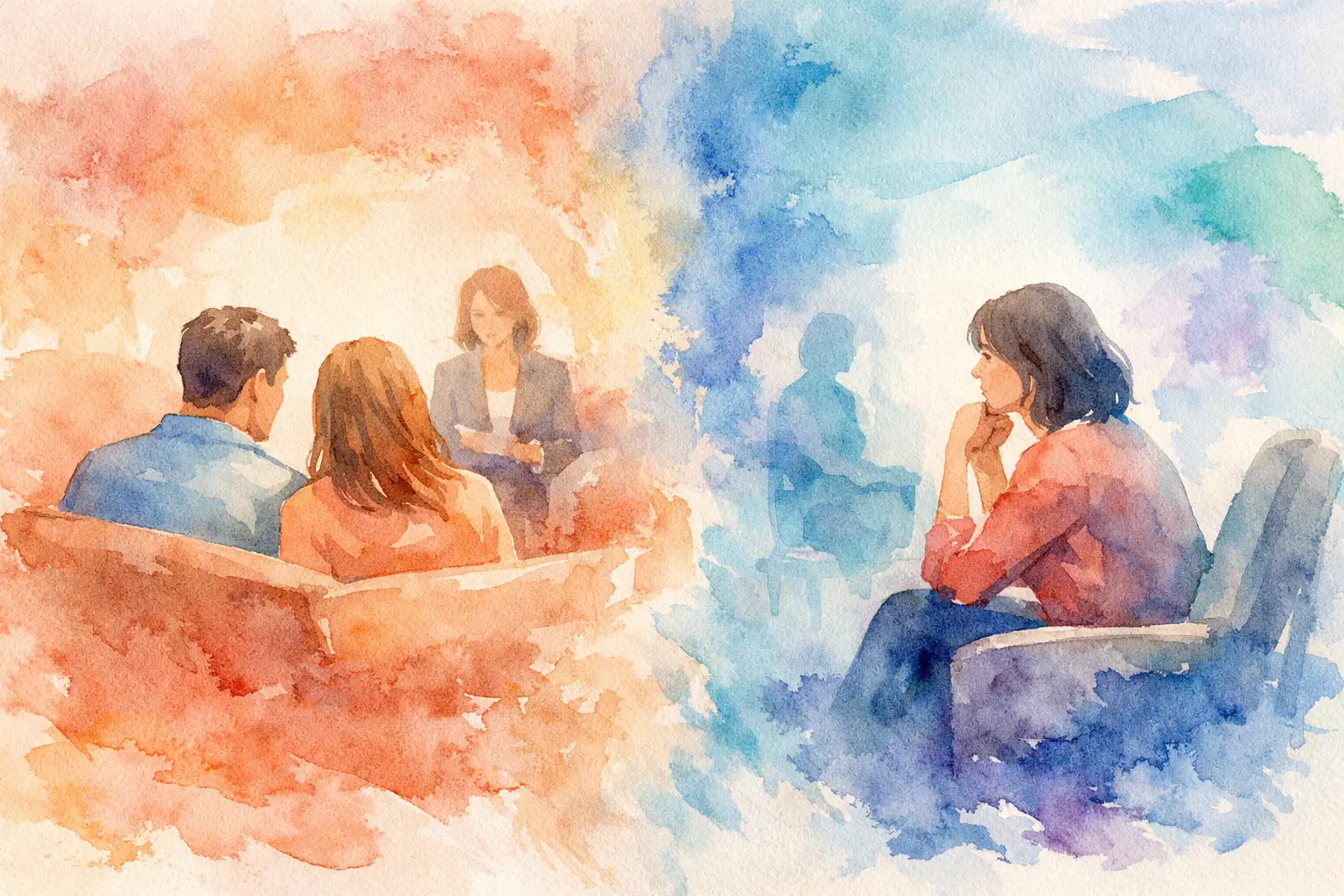
A relationship can feel lonely even when you are sharing a home, a diary and the demands of everyday life. When communication has become strained, trust has been damaged or the same argument keeps returning, it can be difficult to know where to begin. Couples counselling versus individual therapy is not simply a choice between talking together or talking alone. Each offers a different kind of space, and the right starting point depends on what is happening for you, your relationship and your sense of safety.
What couples counselling is designed to address
Couples counselling gives both partners a structured, supported setting in which to understand what is happening between them. The focus is the relationship itself: the patterns that have developed, the needs that may be going unheard and the ways each person responds when they feel hurt, criticised, rejected or overwhelmed.
A therapist does not take sides or decide who is right. Instead, they help a couple slow down conversations that may normally escalate, become defensive or end in silence. This can make room for each partner to explain their experience more clearly and to hear the other person without immediately preparing a response.
Couples may seek support for ongoing conflict, emotional distance, changes in intimacy, parenting differences, infidelity, money worries, life transitions or uncertainty about whether to stay together. It can also be useful when a couple wants to strengthen a relationship that feels under pressure before problems become entrenched.
The aim is not always to keep a relationship together at any cost. Sometimes counselling helps people decide, with care and clarity, what they need next. For some, that means rebuilding trust and connection. For others, it may mean finding a more respectful way to separate or co-parent.
When individual therapy may be a better first step
Individual therapy is centred on your own emotional wellbeing, history and goals. It offers a private space to speak freely about feelings, experiences and concerns that may affect a relationship but are not limited to it.
You might choose individual counselling if anxiety, depression, grief, trauma, low self-esteem, addiction or a difficult past is making relationships harder to manage. You may also need space to understand your own boundaries, identify patterns in the people you choose, or consider why certain situations trigger such strong reactions.
For example, someone who becomes highly anxious when their partner is late home may be responding not only to the present situation, but also to earlier experiences of abandonment or betrayal. Couples work could help both partners communicate around this. Individual therapy can provide the focused support needed to explore the deeper fear and develop ways of coping with it.
Individual therapy can also be the right choice when only one person is ready to seek help. Meaningful change does not have to wait until both partners agree to attend counselling. Working on your own wellbeing can improve self-awareness, communication and confidence in making decisions.
Couples counselling versus individual therapy: key differences
The most significant difference is where the therapist places the focus. In couples counselling, the relationship is the client. In individual therapy, you are the client. Both approaches involve confidentiality, professional boundaries and a non-judgemental therapeutic relationship, but the practical arrangements and goals differ.
In a couples session, both people need enough willingness to participate honestly and respectfully. The work often includes noticing interaction patterns in real time. One person may pursue reassurance while the other withdraws, for instance. Neither pattern usually develops in isolation, and therapy can help a couple recognise the cycle rather than seeing each other as the problem.
In individual sessions, there is more opportunity to explore personal experiences in depth and at your own pace. You do not need to manage another person’s reaction in the room. This can be especially valuable if you are unsure what you feel, worried about upsetting your partner or not yet ready to share certain experiences.
Neither option is automatically more effective. A couple struggling with repeated misunderstandings may benefit most from working together. A person recovering from trauma, managing panic attacks or rebuilding self-worth may need individual support first. In many cases, both forms of therapy can be helpful at different times.
Can you have individual and couples therapy at the same time?
Sometimes, yes. It is not unusual for one or both partners to have individual therapy alongside couples counselling, particularly where personal mental health needs and relationship difficulties overlap. Clear boundaries are essential, however.
Therapy works best when everyone understands the purpose of each service and when therapists are not placed in conflicting roles. A couples therapist may discuss what can be worked with in joint sessions, while an individual therapist supports the client’s personal wellbeing. Open discussion about confidentiality and expectations from the outset helps prevent confusion.
It may be more appropriate to begin with individual support and consider couples counselling later. This can be the case where one partner is in acute distress, where substance use needs immediate attention, or where someone needs time to feel more emotionally stable before engaging in difficult conversations together.
Situations where joint therapy may not be suitable
Couples counselling is not appropriate in every situation. If there is ongoing abuse, coercive control, intimidation or fear within the relationship, attending sessions together may not be safe. A person may feel unable to speak honestly, and information raised in therapy could increase the risk of harm afterwards.
In these circumstances, individual specialist support and a focus on safety are usually more appropriate. If you are in immediate danger, contact emergency services. If you are unsure whether your relationship is safe enough for joint counselling, speaking confidentially with a qualified therapist can help you consider the options.
Joint work may also need to pause when one partner is unwilling to attend, is repeatedly unable to engage respectfully, or expects the therapist to prove the other person wrong. Counselling is not a courtroom. It requires a basic commitment from both people to examine their own contribution to the pattern, even when one person feels more hurt than the other.
Questions that can help you decide
Rather than asking, “Whose fault is this?”, it can be more useful to ask what kind of support is needed right now. Are your main concerns about how you communicate, reconnect or make decisions together? Are you carrying personal pain that affects many areas of life, not only your relationship? Do you feel safe to speak openly with your partner present?
It can also help to consider your immediate goal. If you want to understand recurring conflict and practise new ways of relating, couples counselling may be a good fit. If you need to process bereavement, trauma, anxiety or a loss of confidence, individual therapy may offer the privacy and focus you need. If the answer feels like both, an initial conversation with a therapist can clarify a sensible route forward.
You do not have to arrive with perfect language for what is wrong. Many people begin therapy only knowing that they feel exhausted, disconnected or stuck. A good therapeutic space helps turn that uncertainty into a clearer understanding of what needs care.
Finding support that feels manageable
Starting therapy can feel like a significant step, particularly when emotions are already running high. Practical details matter. Some people find face-to-face sessions helpful because the room offers a neutral place away from daily distractions. Others need the flexibility and privacy of remote therapy, especially when work, caring responsibilities or travel make appointments difficult.
For people in Folkestone, Hythe and the wider Kent area, Self Horizons offers professionally delivered support for both individuals and couples. The first step is not a commitment to a particular outcome. It is an opportunity to talk about what has been difficult and consider the form of support that feels safe, appropriate and useful.
Whether you begin alone or together, therapy can offer more than a place to revisit problems. It can help you respond to them with greater honesty, steadiness and care – including care for yourself.