
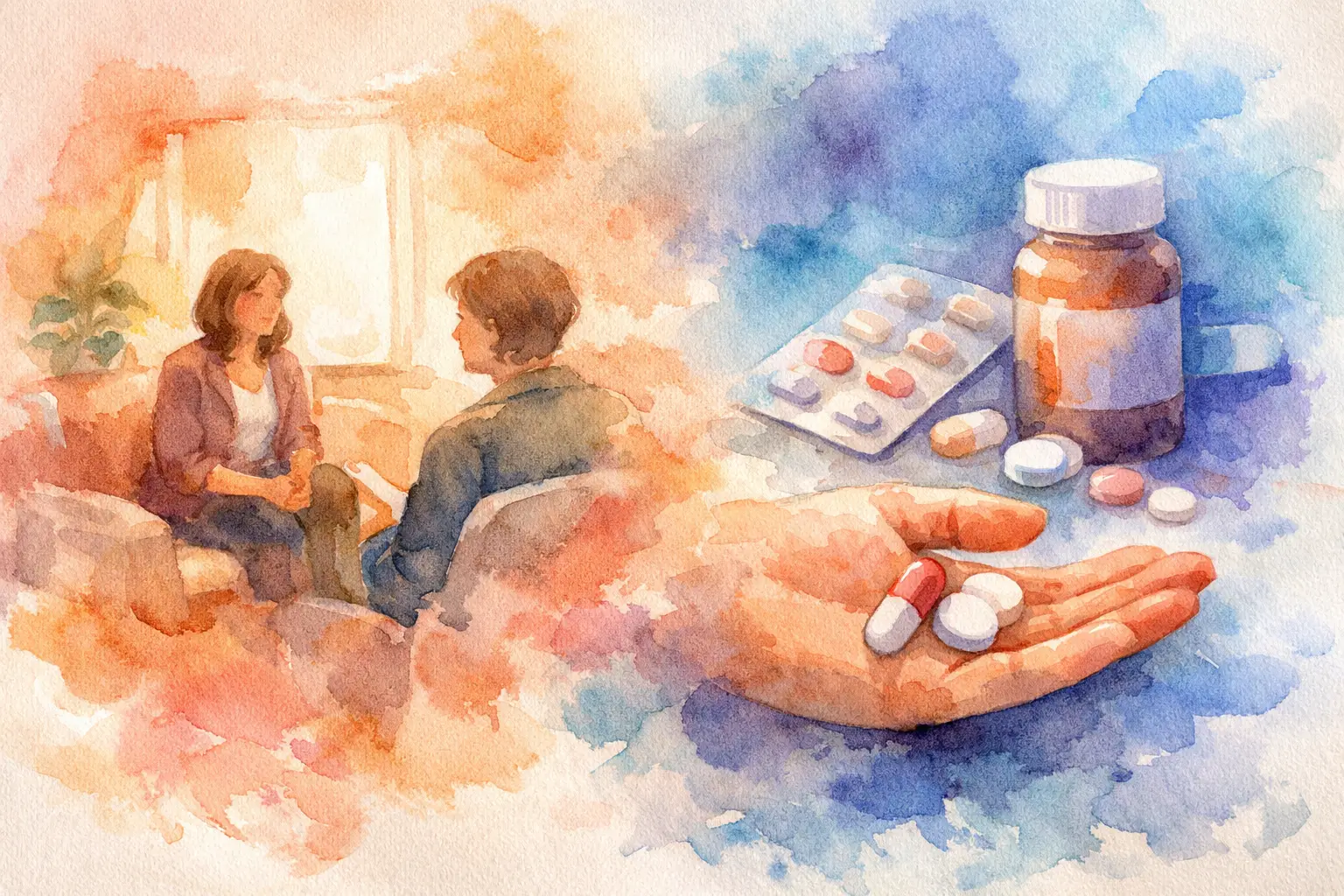
Depression can make even straightforward decisions feel heavy. When people consider therapy versus medication depression treatment, they are often not looking for a debate or a single “right” answer. They want to know what may genuinely help them feel more like themselves again.
For many people, therapy, medication, or a combination of both can be effective. The most suitable route depends on the nature of your symptoms, how long they have been present, your personal history, your physical health, practical circumstances, and what feels manageable right now. You do not need to have all the answers before asking for support.
Therapy versus medication for depression: the key difference
Medication and therapy support depression in different, often complementary, ways. Antidepressant medication is prescribed by a GP or other qualified prescriber. It can help to reduce symptoms such as persistent low mood, disrupted sleep, low energy, poor concentration, appetite changes, anxiety, or a sense of emotional numbness.
Therapy provides a regular, confidential space to understand what is happening beneath those symptoms. With the support of a trained therapist, you can explore difficult experiences, unhelpful patterns of thinking, relationship pressures, grief, stress, trauma, low self-esteem, or the practical challenges that may be contributing to depression.
Medication may make symptoms more manageable. Therapy can help you make sense of why those symptoms developed, build coping skills, and create changes that are meaningful in your daily life. Neither option should be treated as a test of strength or a measure of how seriously you are struggling.
When medication may be a helpful option
Antidepressants are often considered when depression is moderate to severe, when symptoms have lasted for some time, or when low mood is making work, caring responsibilities, sleep, eating, or basic routines very difficult. They can also be useful where someone is so overwhelmed by anxiety, exhaustion, or hopelessness that engaging in therapy feels difficult at first.
It usually takes time to know whether a medication is helping. Some people notice changes after a few weeks, while others may need to try a different dose or medication with their prescriber. Side effects are possible, particularly early on, and should be discussed openly with the GP or clinician prescribing them. It is generally not advisable to stop antidepressants suddenly without medical guidance, as this can cause withdrawal symptoms or a return of depression.
Medication does not erase life problems, relationship difficulties, grief, traumatic memories, or workplace stress. But for some people, it creates enough breathing room to begin addressing those issues. For others, medication is not the right fit, or the benefits do not outweigh the side effects. A review with a prescriber can help guide that decision safely.
What therapy can offer when you are depressed
Depression often narrows life down to getting through the day. You may withdraw from people, lose interest in things that once mattered, become highly self-critical, or feel convinced that nothing will change. Therapy gives those experiences attention without judgement.
A therapist will not simply tell you to think positively. Good therapy is more practical and more personal than that. It may involve noticing patterns between mood, thoughts, behaviour, relationships, and earlier experiences. It can help you understand why motivation has disappeared, why you feel stuck, or why a small setback feels impossible to recover from.
The approach may vary. Some people benefit from structured work that helps them challenge harsh self-beliefs and gradually return to activities they have avoided. Others need space to process bereavement, childhood experiences, abuse, trauma, identity concerns, or a major life change. Where traumatic experiences are central, a specialist approach such as EMDR may be considered when appropriate.
Therapy is not always comfortable. Talking about painful subjects can bring up strong feelings, particularly in the early stages. Yet it should feel safe, paced, and collaborative. You should be able to raise concerns with your therapist, ask questions about the approach, and decide together what feels most useful.
Is combined treatment better?
For some people, using therapy and medication together is more effective than either option alone. Medication can reduce the intensity of symptoms, while therapy supports longer-term understanding and change. This can be particularly helpful for recurrent depression, severe symptoms, depression alongside anxiety, or low mood connected to trauma and difficult relationships.
Combined treatment is not automatically necessary. Someone experiencing a first episode of mild or moderate depression may prefer to begin with therapy, practical support, and changes to routine. Another person may be clear that medication has helped them before and want to speak with their GP first. Preferences matter, and treatment should be reviewed as circumstances change.
It is also worth remembering that recovery is rarely caused by one thing alone. Sleep, alcohol or drug use, financial pressure, isolation, physical health, caring responsibilities, hormones, chronic pain, work stress, and the availability of supportive relationships can all affect mood. Therapy can help you look at this wider picture without reducing depression to a personal failure.
Questions to help you decide where to start
You do not have to choose a permanent path. A useful starting point is to consider what you need most urgently. If you are struggling to function, sleeping very little, feeling unable to cope, or finding that depression is worsening quickly, speaking with a GP promptly is sensible. They can assess both mental and physical factors, discuss medication, and talk through other available support.
If you feel ready to talk about the pressures, experiences, and patterns behind your low mood, therapy may be a valuable first step. Remote therapy can also make support more accessible if travel, work, childcare, disability, or anxiety makes in-person appointments difficult.
It can help to ask yourself: are my symptoms recent or longstanding? Have I felt this way before? What has helped, or not helped, in the past? Do I need relief from intense symptoms before I can do deeper work? Am I looking for support with a particular event, relationship, loss, or traumatic experience? Your answers do not need to be neat. They simply give a clinician or therapist a clearer picture.
The importance of a proper assessment
Depression can look different from one person to another. Some people feel tearful and slowed down, while others feel irritable, restless, disconnected, or constantly busy. It can occur alongside anxiety, panic attacks, addiction, grief, post-traumatic stress, or relationship difficulties. A proper assessment helps avoid a one-size-fits-all response.
Your GP may also want to rule out physical causes or contributors to low mood, such as thyroid problems, vitamin deficiencies, chronic illness, medication side effects, or hormonal changes. A therapist can assess the emotional and relational context, as well as whether a particular therapy approach is likely to be helpful.
If you are already taking antidepressants and considering therapy, be open about this in your first session. Therapy is not there to judge your medication choices. Equally, if you are in therapy and feel your symptoms are becoming harder to manage, discussing this with your GP can be an important part of looking after yourself.
If depression feels unsafe
Depression can sometimes bring thoughts of self-harm, suicide, or a feeling that you cannot stay safe. If you are in immediate danger, call 999 or go to A&E. If you need urgent mental health support but it is not an emergency, contact NHS 111 and select the mental health option where available, or speak to your GP surgery.
You deserve support before you reach crisis point. Telling one trusted person that you are struggling can be a meaningful first move, even if you are not sure what you need from them yet.
There is no prize for managing depression alone, and no shame in choosing medication, therapy, or both. If you are in Folkestone, Hythe, or the wider Kent area, speaking with a qualified therapist can offer a calm place to begin. The next step does not need to solve everything. It only needs to make room for the possibility that things can change.